Malcolm X: A Journey from Darkness to Light
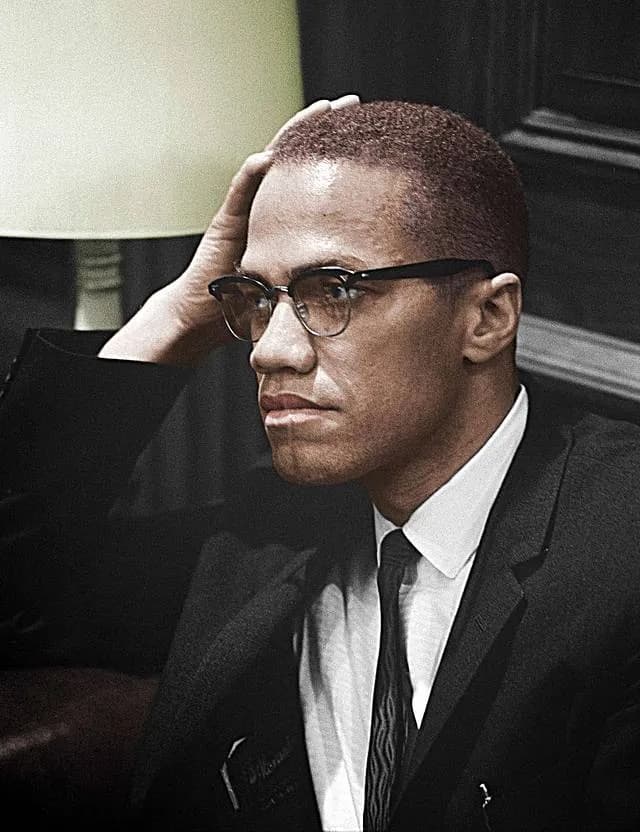
Malcolm
39 years old, from United States
Previous Religion: Nation of Islam
My Life Before Islam
Malcolm X was born Malcolm Little on May 19, 1925, in Omaha, Nebraska. His father, Earl Little, was a Baptist minister and follower of Marcus Garvey's Universal Negro Improvement Association (UNIA), which had Islamic influences. His mother, Louise Little, was also actively involved in UNIA work.
After his father died when Malcolm was six—under suspicious circumstances—the family faced severe hardship. Malcolm grew up in Michigan and later moved to New York City, where he fell into a life of crime and drug dealing. By his teens, Malcolm had become completely immersed in street culture, eventually landing in prison in 1946.
The Moment of Guidance
While in prison, Malcolm X's brother Reginald visited him and spoke about the Nation of Islam, a movement that taught Black pride, self-reliance, and separation from white society. The message resonated deeply with Malcolm, who had experienced firsthand the racism and oppression faced by Black Americans.
Malcolm began educating himself voraciously, reading widely and developing his powerful oratory skills. He became a leading voice for the Nation of Islam, preaching against integration and advocating for Black separatism. His speeches electrified audiences and made him one of the most influential Black leaders in America.
Reflections
In 1964, Malcolm X made a life-changing pilgrimage to Mecca. This journey fundamentally transformed his worldview. In Mecca, he saw Muslims of all colors and backgrounds—people from every race and nation—united in their worship of God. This experience shattered his previous beliefs about race and opened his eyes to a universal concept of humanity.
Upon his return, Malcolm X had evolved from a separatist to an advocate for unity and human rights. He no longer saw white people as his enemies but rather acknowledged that there were sincere people of all races who wanted justice. He famously stated: "I've had enough of someone else's propaganda... I'm for truth, no matter who tells it. I'm for justice, no matter who it's for or against."
Malcolm X's assassination on February 21, 1965, cut short a remarkable journey of transformation. Yet his evolution—from a troubled youth to a powerful speaker, from a separatist to a universalist—continues to inspire people around the world. His story reminds us that the search for truth can lead us to unexpected places, and that genuine seekers are always open to growth and change.