The Greatest: Muhammad Ali's Journey to Islam
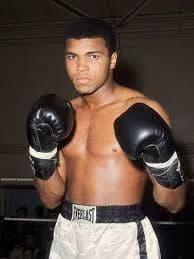
Muhammad
22 years old, from United States
Previous Religion: Christianity
My Life Before Islam
Muhammad Ali was born Cassius Marcellus Clay Jr. on January 17, 1942, in Louisville, Kentucky. Raised as a Baptist, he began boxing at age 12 and quickly rose through the ranks to become an Olympic gold medalist and then the heavyweight champion of the world.
However, despite his success in the ring, Ali was searching for something deeper in life. He was drawn to questions of identity, purpose, and spirituality that couldn't be answered by boxing titles and fame.
The Moment of Guidance
In the early 1960s, Ali began attending Nation of Islam meetings in Chicago. It was during this time that he met Malcolm X, who became a highly influential mentor to him. Malcolm X's teachings about Black pride, self-reliance, and the true meaning of Islam deeply resonated with the young boxer.
Ali was particularly drawn to the concept of God as the Only One—without partners or intermediaries. This idea of absolute monotheism (Tawhid) was fundamentally different from the Christianity he had grown up with.
Reflections
In 1964, after defeating Sonny Liston to become the world heavyweight champion, Muhammad Ali famously declared his conversion to Islam. He changed his name from Cassius Clay to Muhammad Ali, rejecting what he called his "slave name."
His conversion was controversial in America at the time. Many criticized him, and some newspapers continued to use his birth name for years. But Ali stood firm in his faith, becoming one of the most visible American Muslims.
In later years, Ali moved beyond the Nation of Islam's racially separatist ideas to embrace what he called "true Islam"—a more universal and inclusive form of the faith. In 2005, he adopted Sufi Islam, maintaining his commitment to the faith until his death in 2016.
Muhammad Ali became not just a sporting legend but a cultural icon and symbol for American Muslims. His courage in maintaining his faith despite criticism inspired countless people around the world to explore Islam. He showed that conversion to a new faith requires bravery and conviction, and that true faith transcends cultural and racial boundaries.
Ali once said: "I am America. I am the part of America who didn't know how to sing and dance but still got love from my people." His journey from Christianity to Islam, and his subsequent evolution within the faith, remains one of the most powerful conversion stories in modern history.